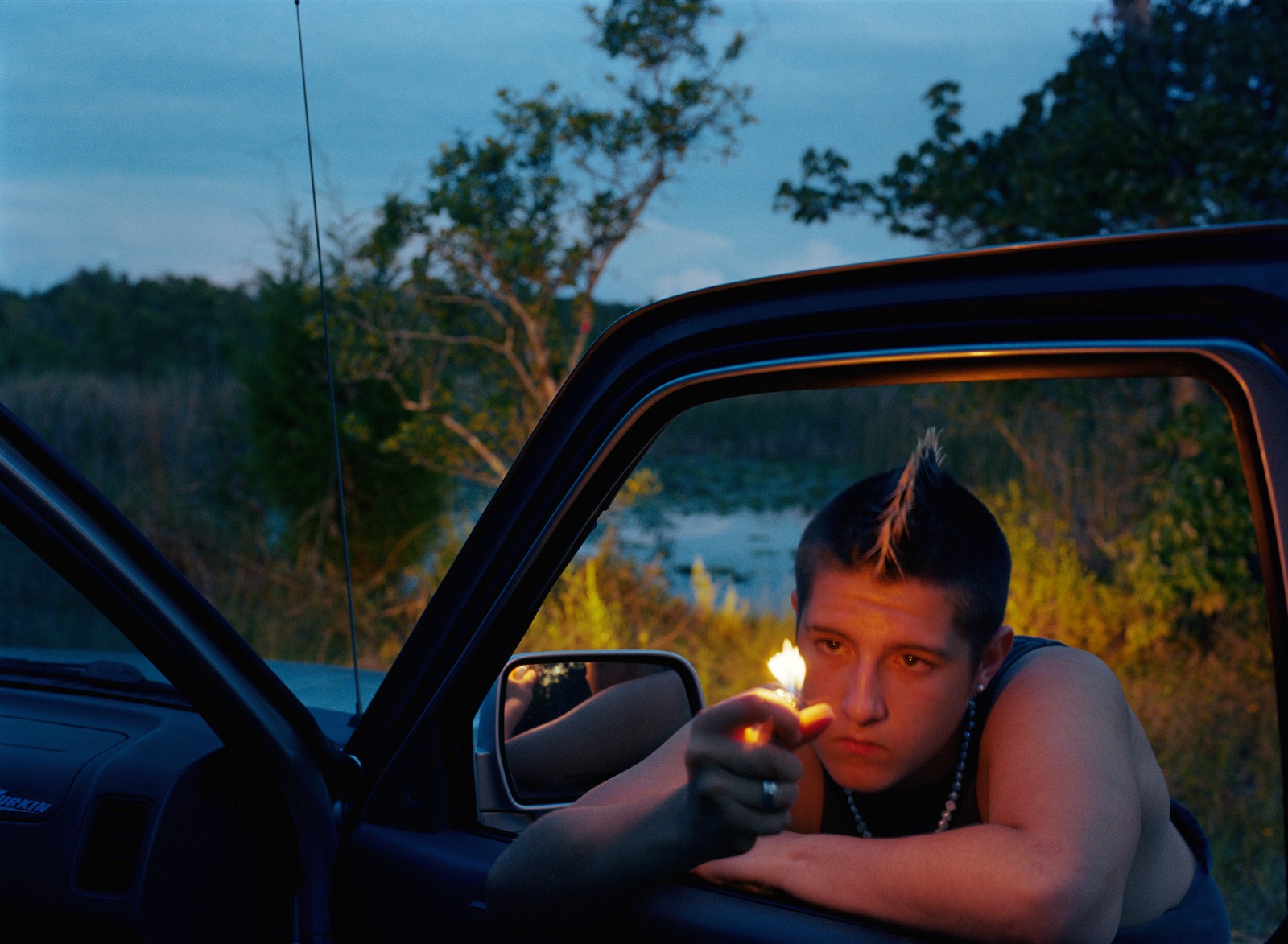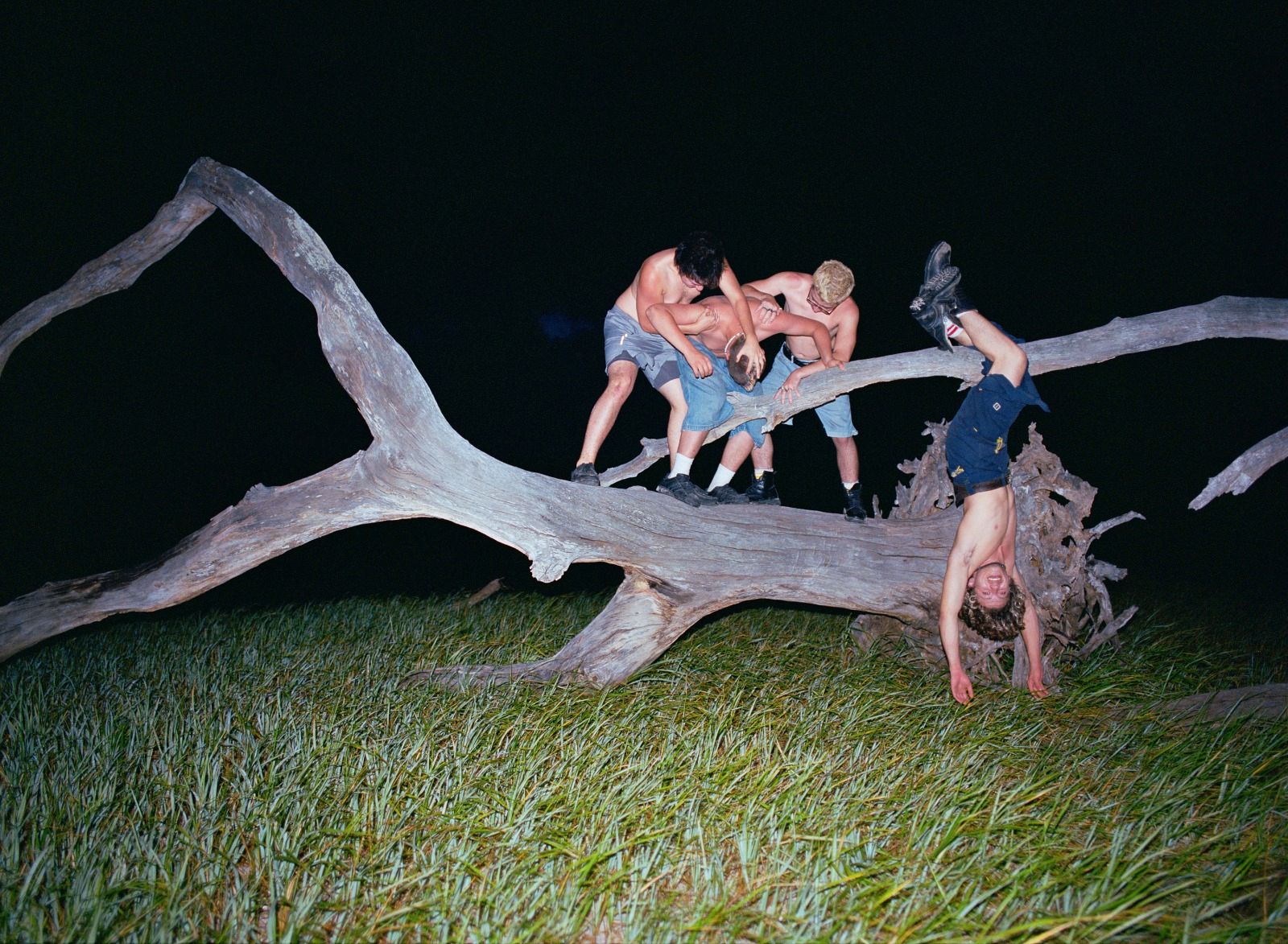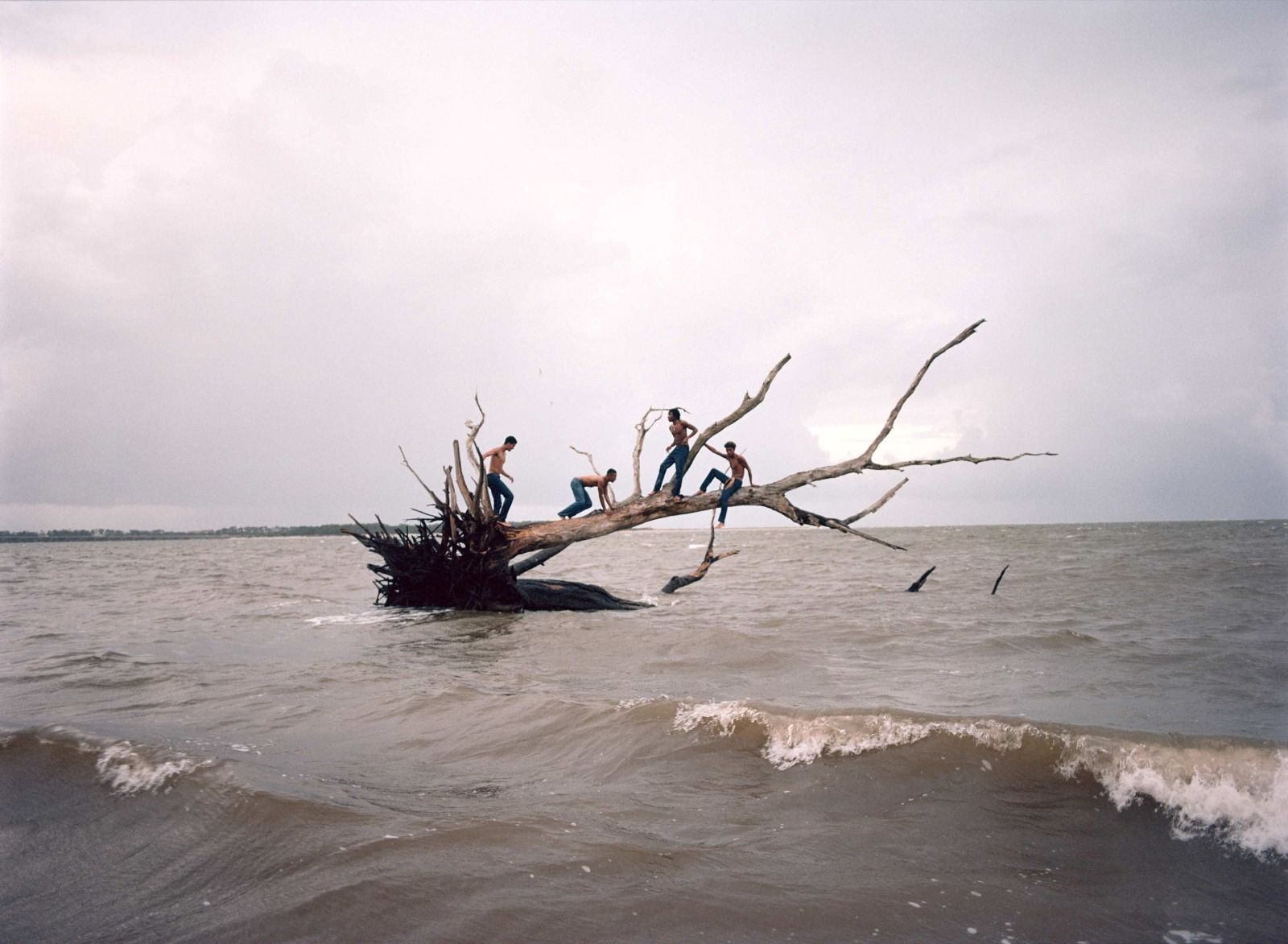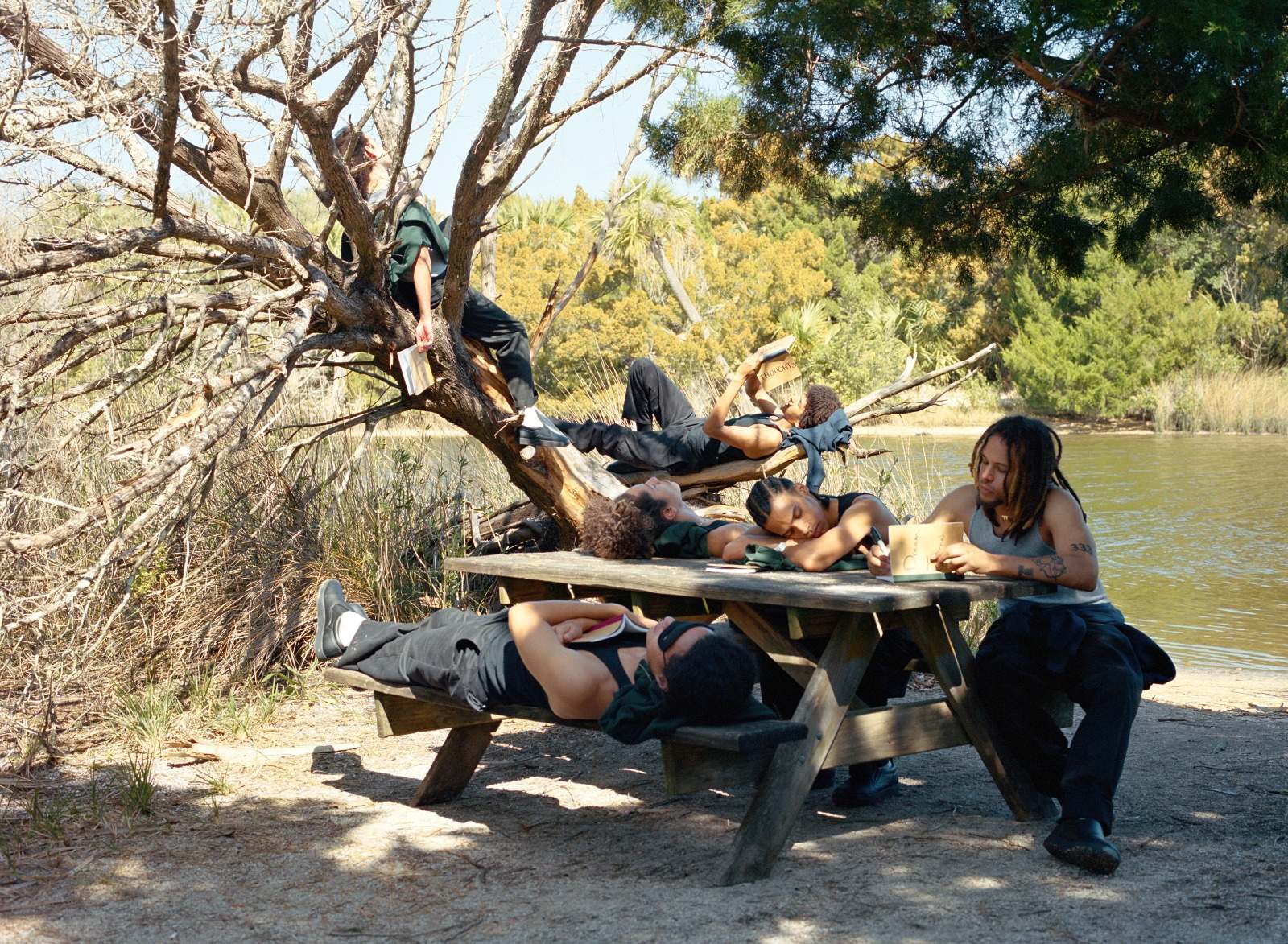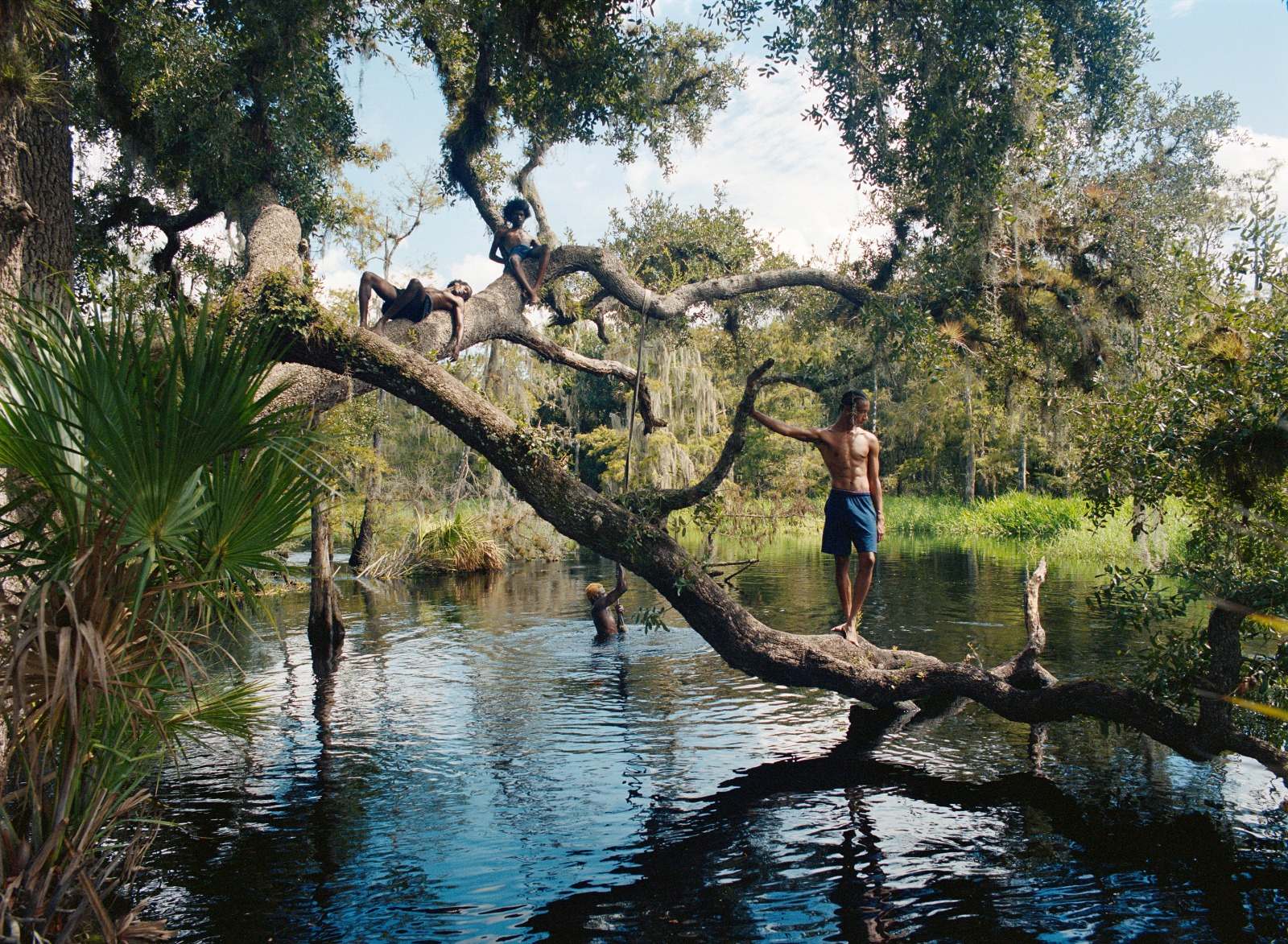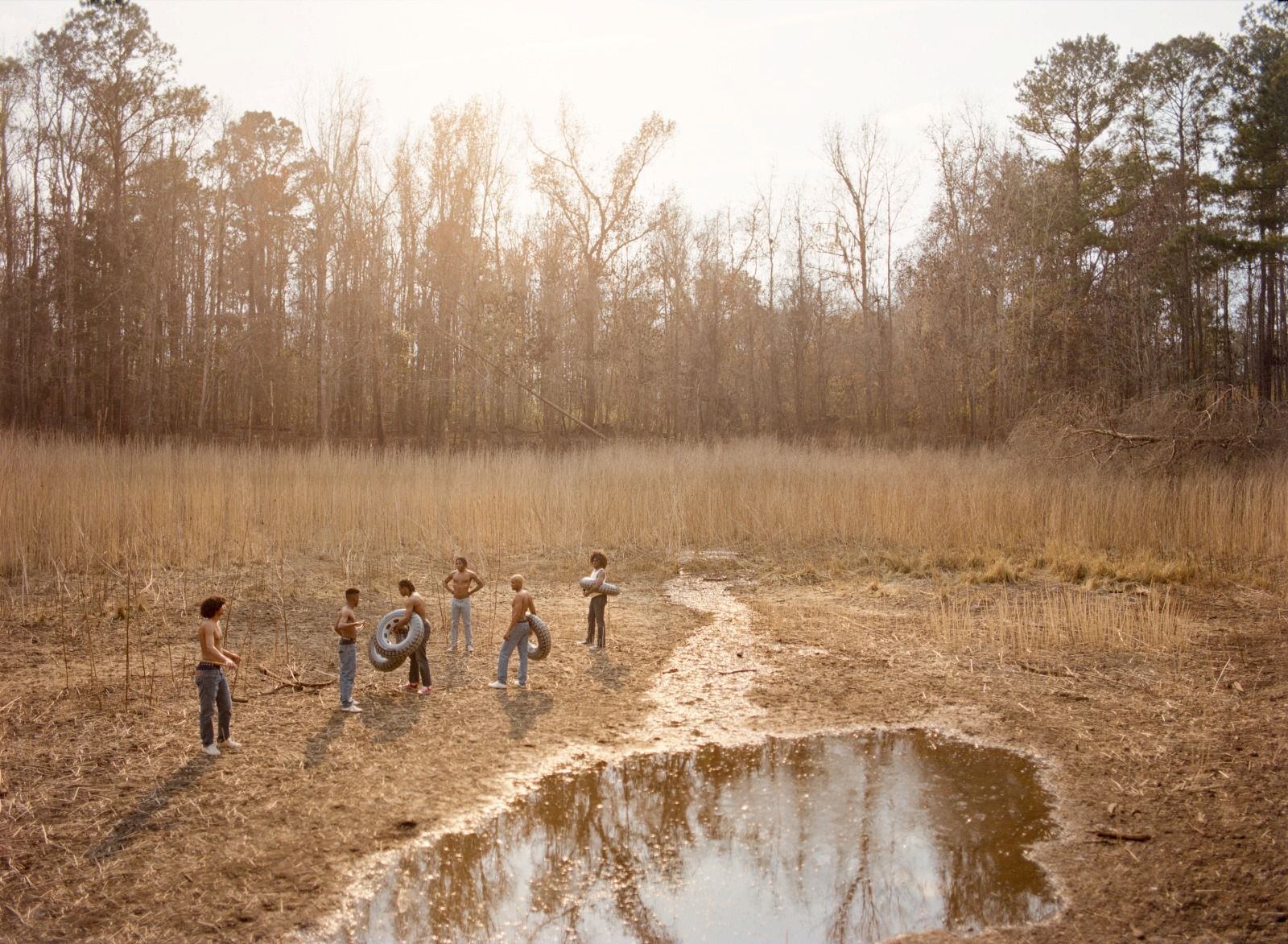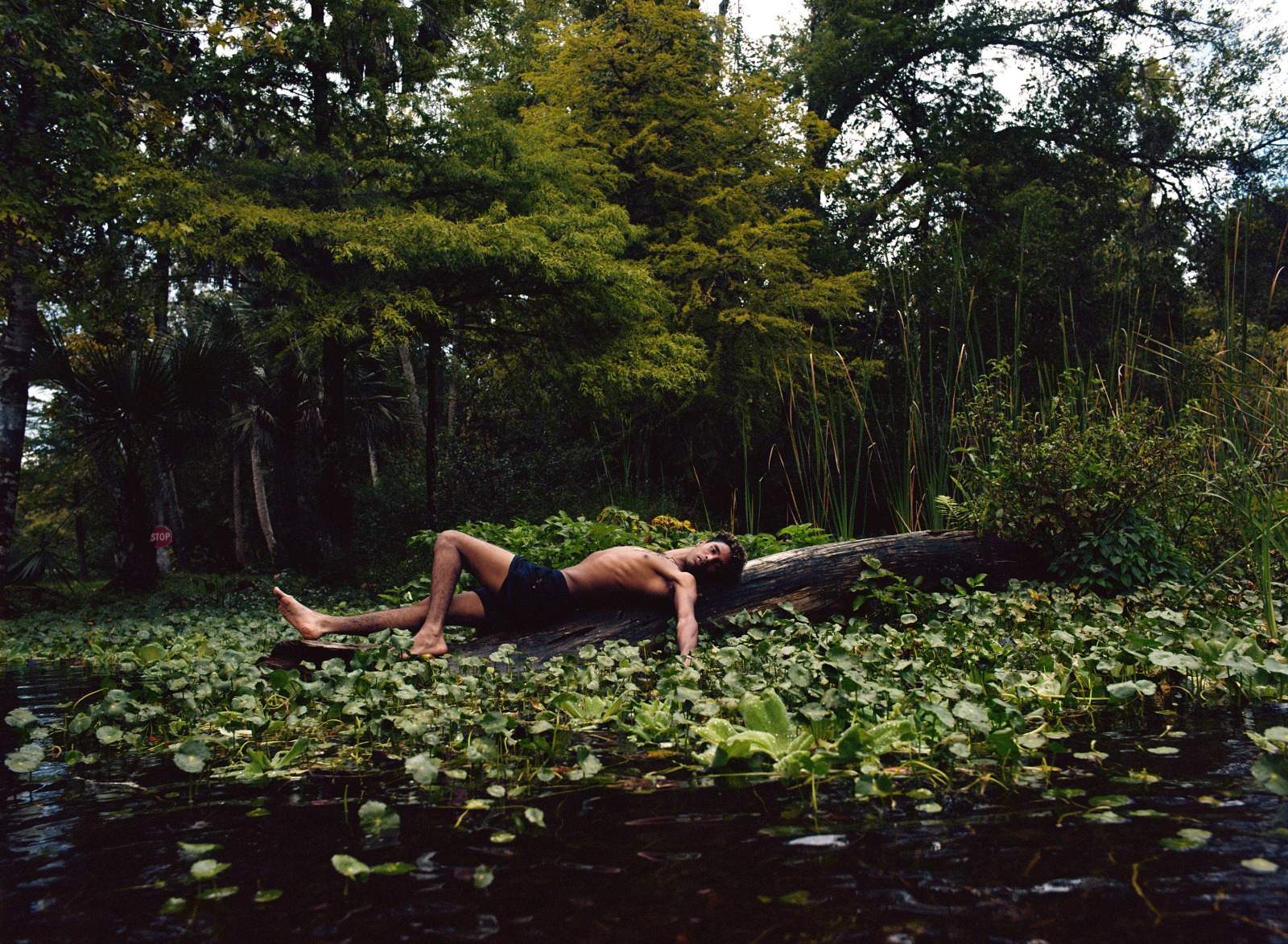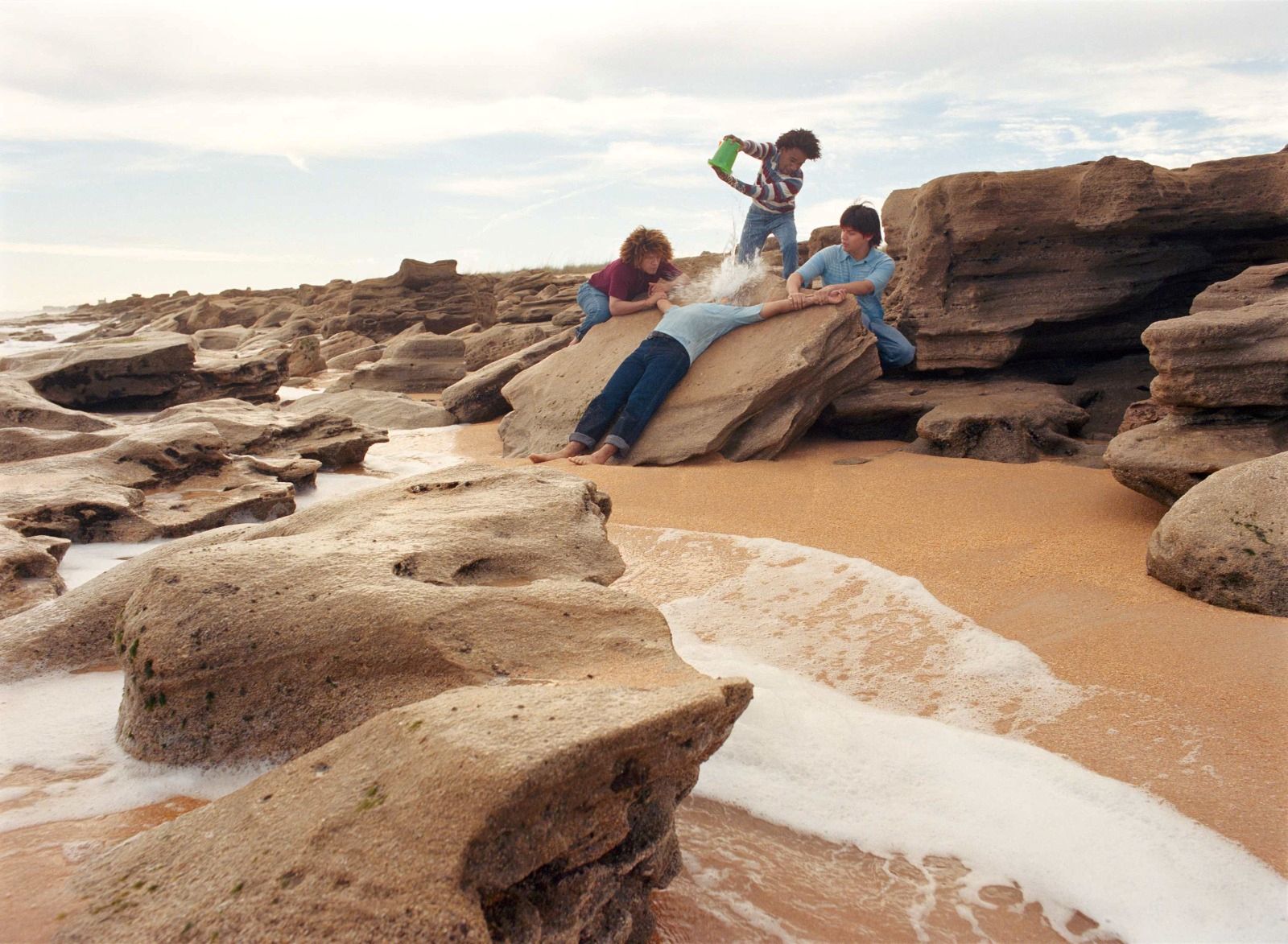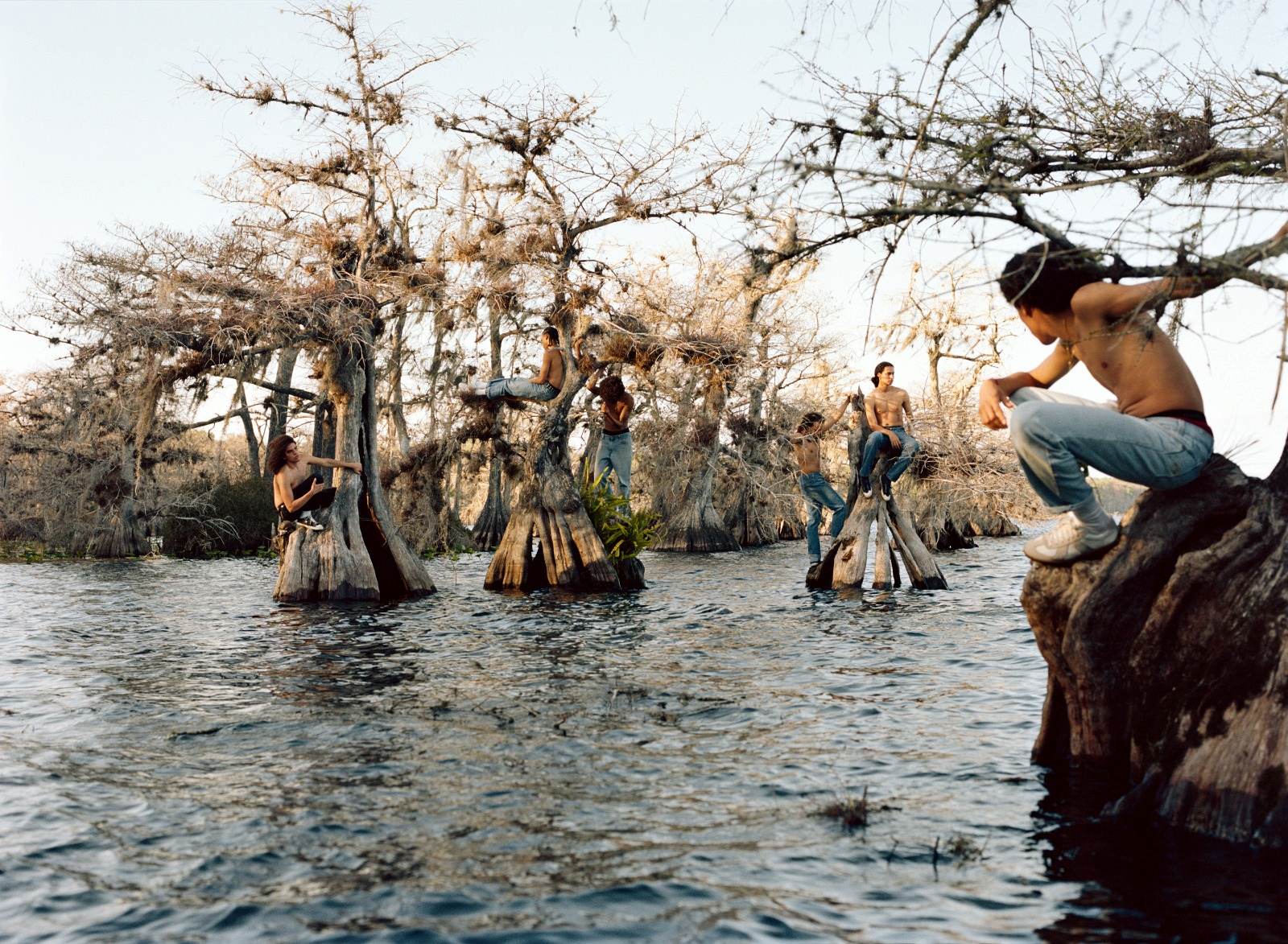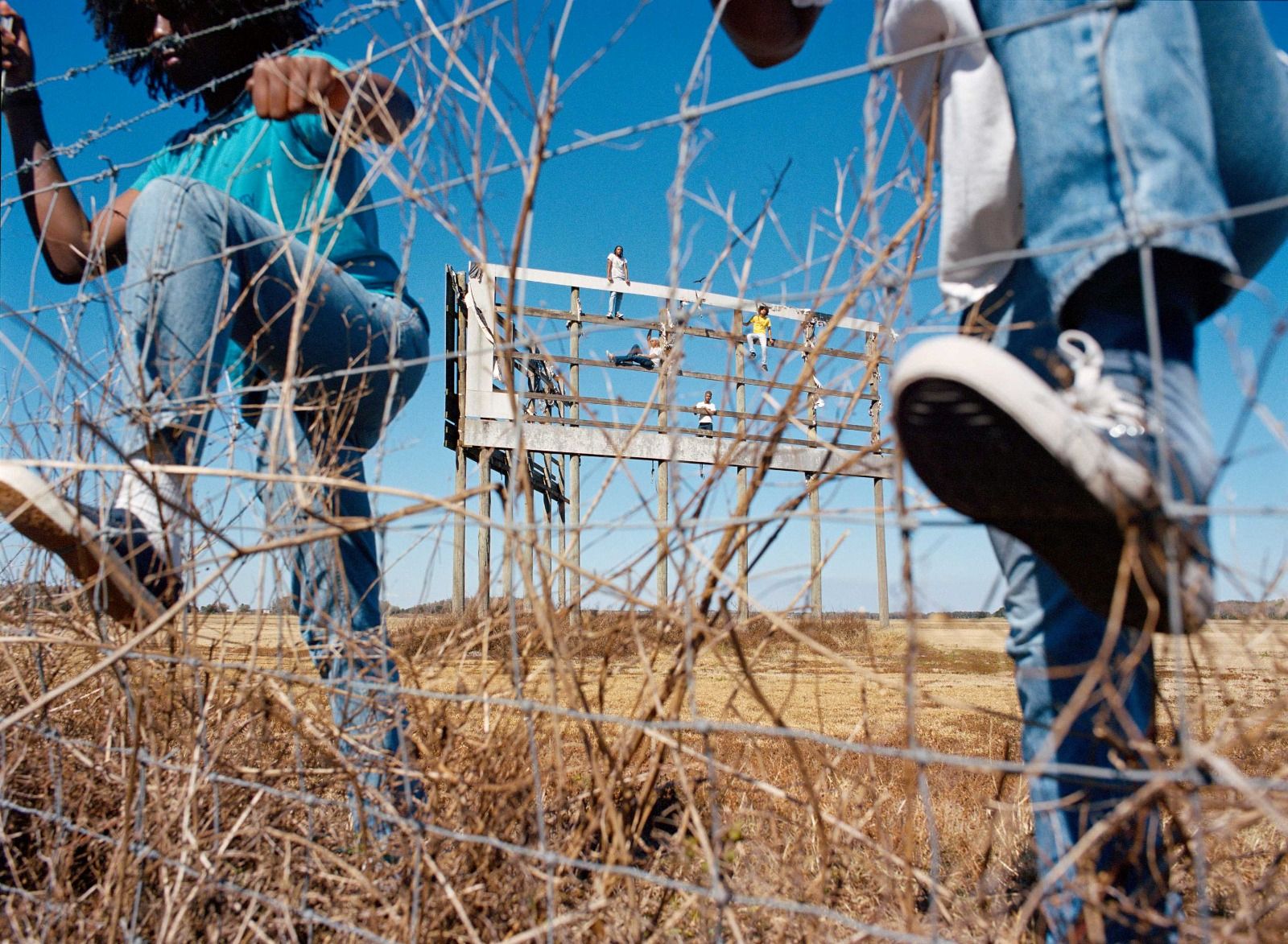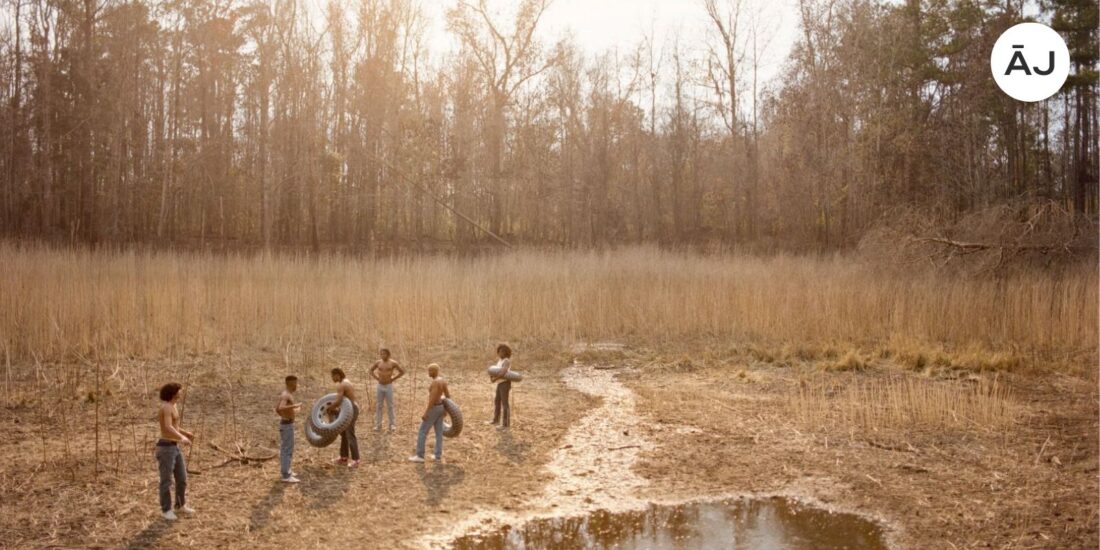
In Florida Boys, Josh Aronson uses staged photography to examine how landscape shapes identity, especially ideas of masculinity, belonging, and coming of age in the contemporary American South. Made between 2020 and 2025, the project unfolds across Florida’s springs, swamps, forests, beaches, and backroads: places that have long carried the weight of American mythology, from pastoral freedom and boyhood adventure to histories of exclusion, displacement, and environmental loss. Aronson treats these landscapes not as passive settings, but as active forces. They shape posture, proximity, behavior, and desire. Within them, the body becomes a site where inherited narratives of the South are both felt and revised.
The project centers on groups of young men, many of them first-generation or immigrant youth from Miami, whose relationship to Florida is marked by cultural in-betweenness. Like Aronson himself, they do not encounter the Southern landscape as a space of automatic belonging, but as one already coded by histories and images that have often left them out. Through careful staging, Aronson creates a space in which those exclusions can be reimagined. His photographs are planned through research, scouting, casting, and composition, then shaped collaboratively on site, allowing gesture, mood, and emotional tone to emerge between the artist, the participants, and the landscape itself. The resulting images sit between documentary and fiction. They are not records of what simply occurred, but propositions for what might be possible.
Across the series, familiar tropes of boyhood are slowed down and made strange. The boys gather, float, climb, rest, touch, and look toward one another. Masculinity appears not as dominance or certainty, but as something tentative, porous, and relational. Aronson’s use of film deepens this sense of duration. The delay between making and seeing an image becomes part of the work’s emotional structure, allowing memory, performance, and longing to settle into the photograph. In this way, Florida Boys does not reject the visual language of Americana so much as restage it from within, replacing its inherited heroes with young men whose presence complicates the fantasy of who has been permitted to inhabit the South freely.
As the project has moved through exhibitions, public installations, and moving-image presentations, its form has continued to expand. In contexts such as Currents at the Ogden Museum of Southern Art, Horizons at the Belfast Photo Festival, Florida Boys at Baker–Hall in
Miami, and Aronson’s multi-channel video presentation at Vizcaya Museum & Gardens, Florida Boys has taken on new spatial and civic dimensions. The work shifts from the framed photograph to the garden, the museum, the historic estate, and the public sphere, insisting that belonging is not only an image to be made, but a space to be entered. These exhibition moments extend the project’s central proposition: that photography can be a form of world-building, a way of carving out temporary but vivid spaces where tenderness, play, rest, and shared presence become possible.
Ultimately, Florida Boys asks what it means to imagine an alternate Southern landscape from the vantage point of those who have inherited it unevenly. Florida appears here as both real and mythic, beautiful and unstable, intimate and unresolved. It is a place of springs and swamps, leisure and violence, fantasy and fracture. Within that terrain, Aronson constructs a vision of boyhood that is less about innocence than possibility. The photographs open a space where first-generation and immigrant identities can inhabit the American South on their own terms, and where masculinity might be seen not as something fixed, but as something tender, collective, and still becoming.