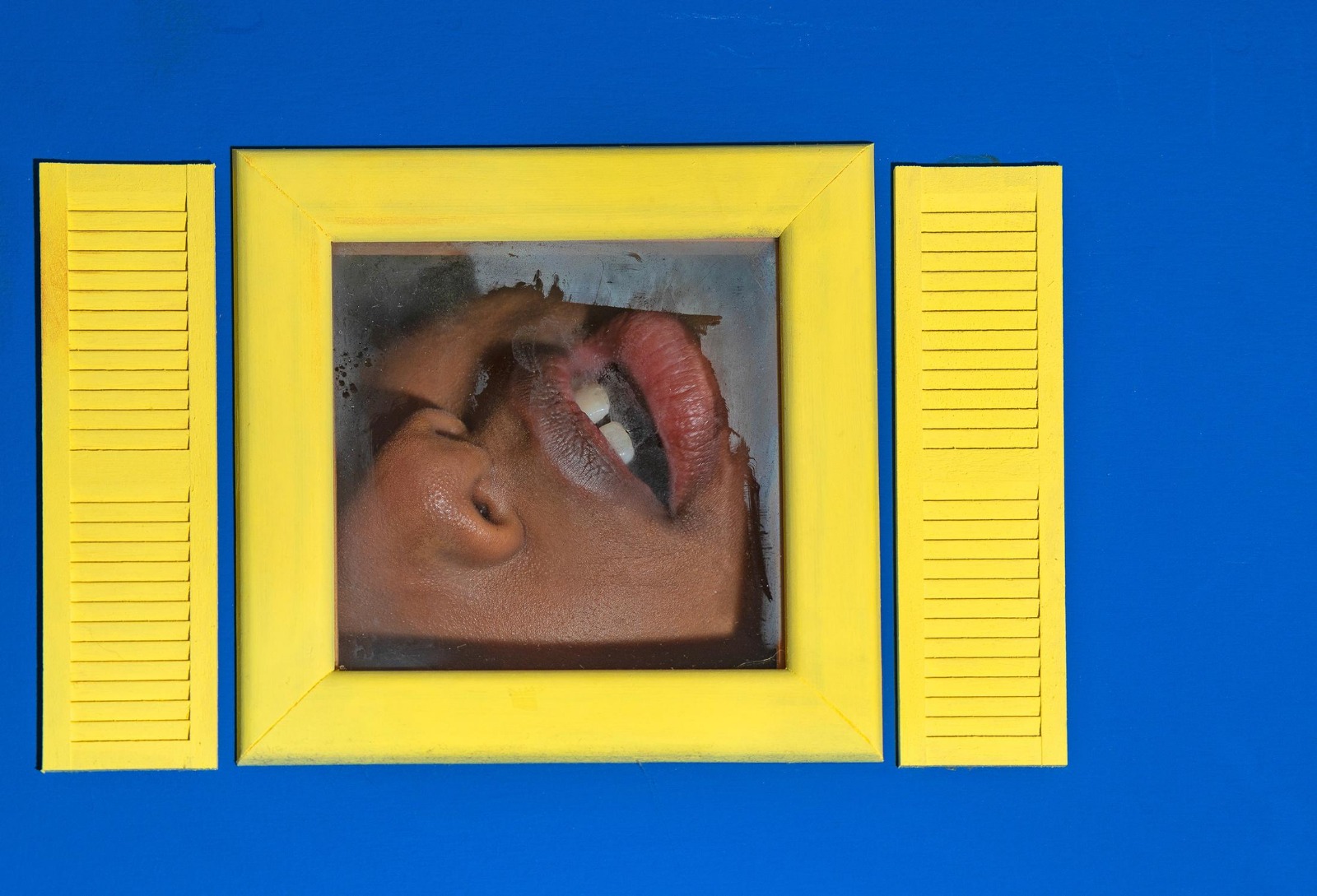
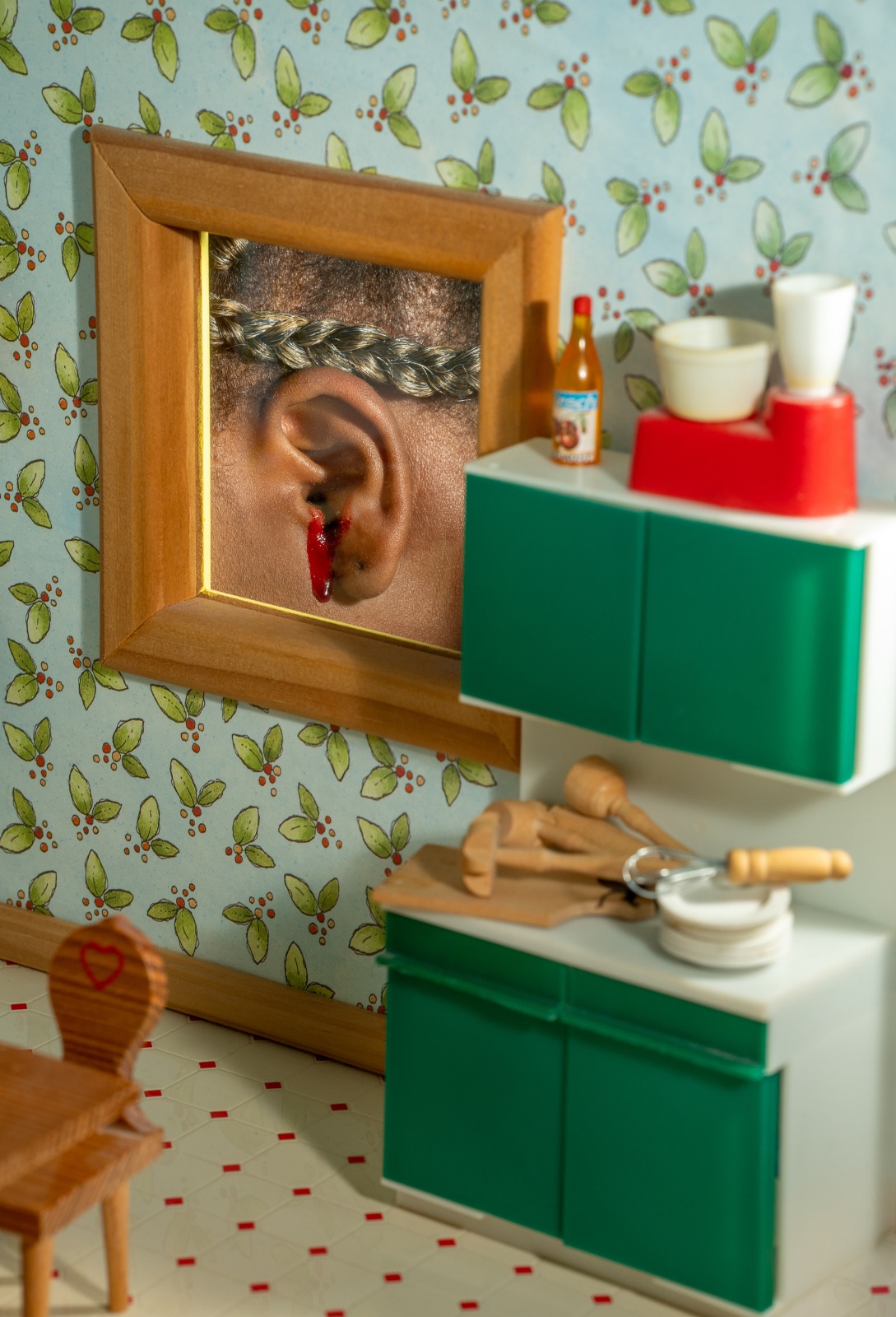
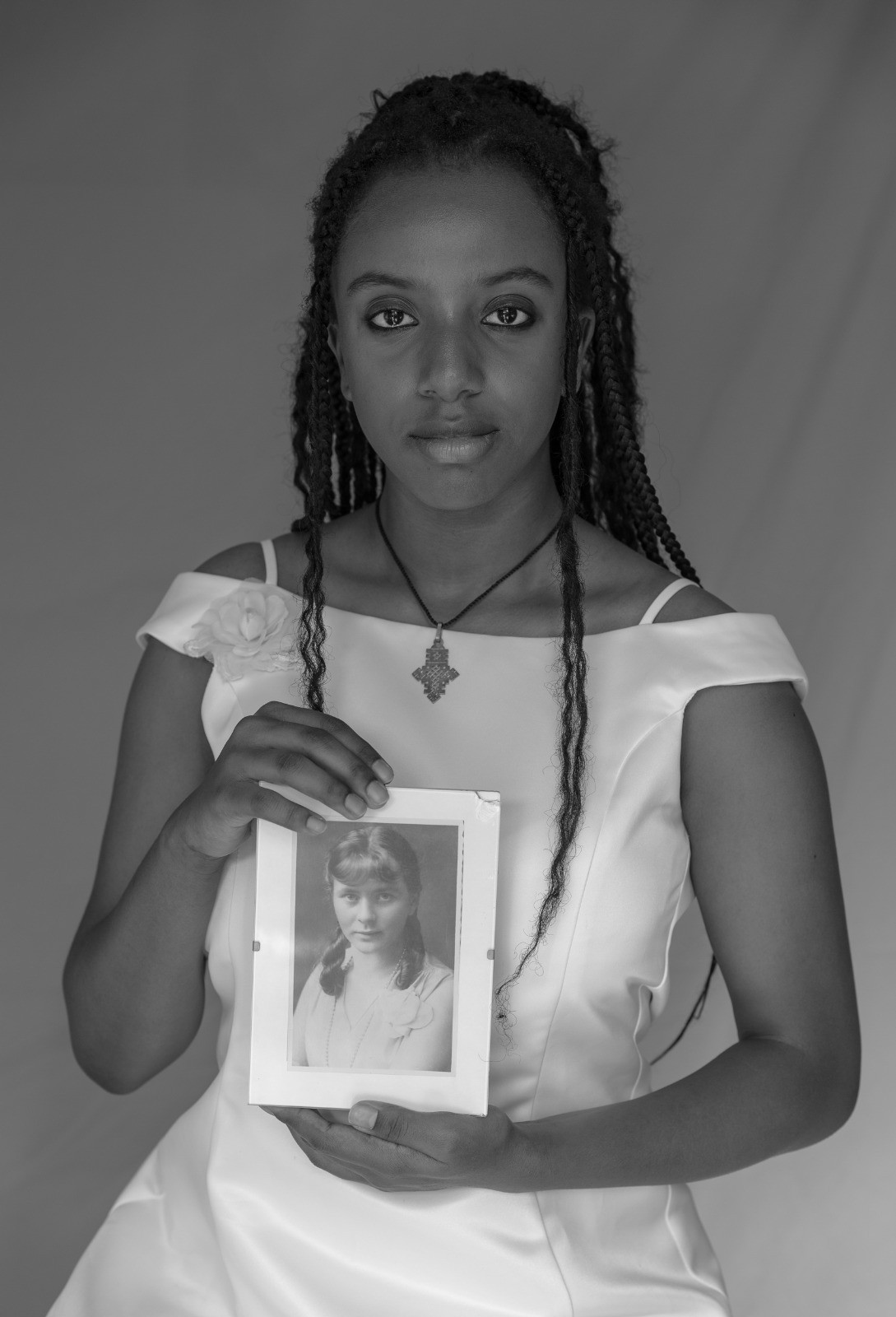
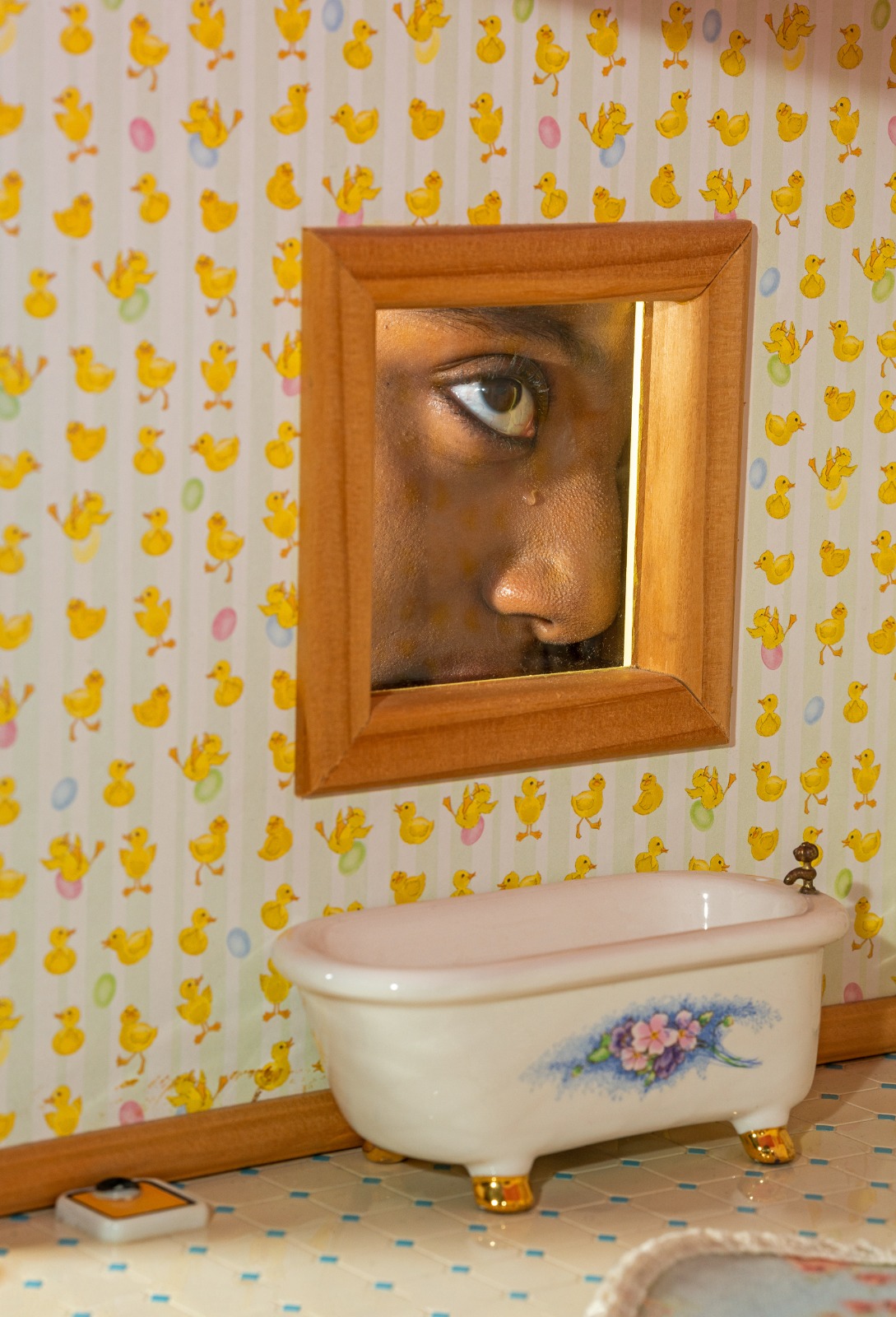
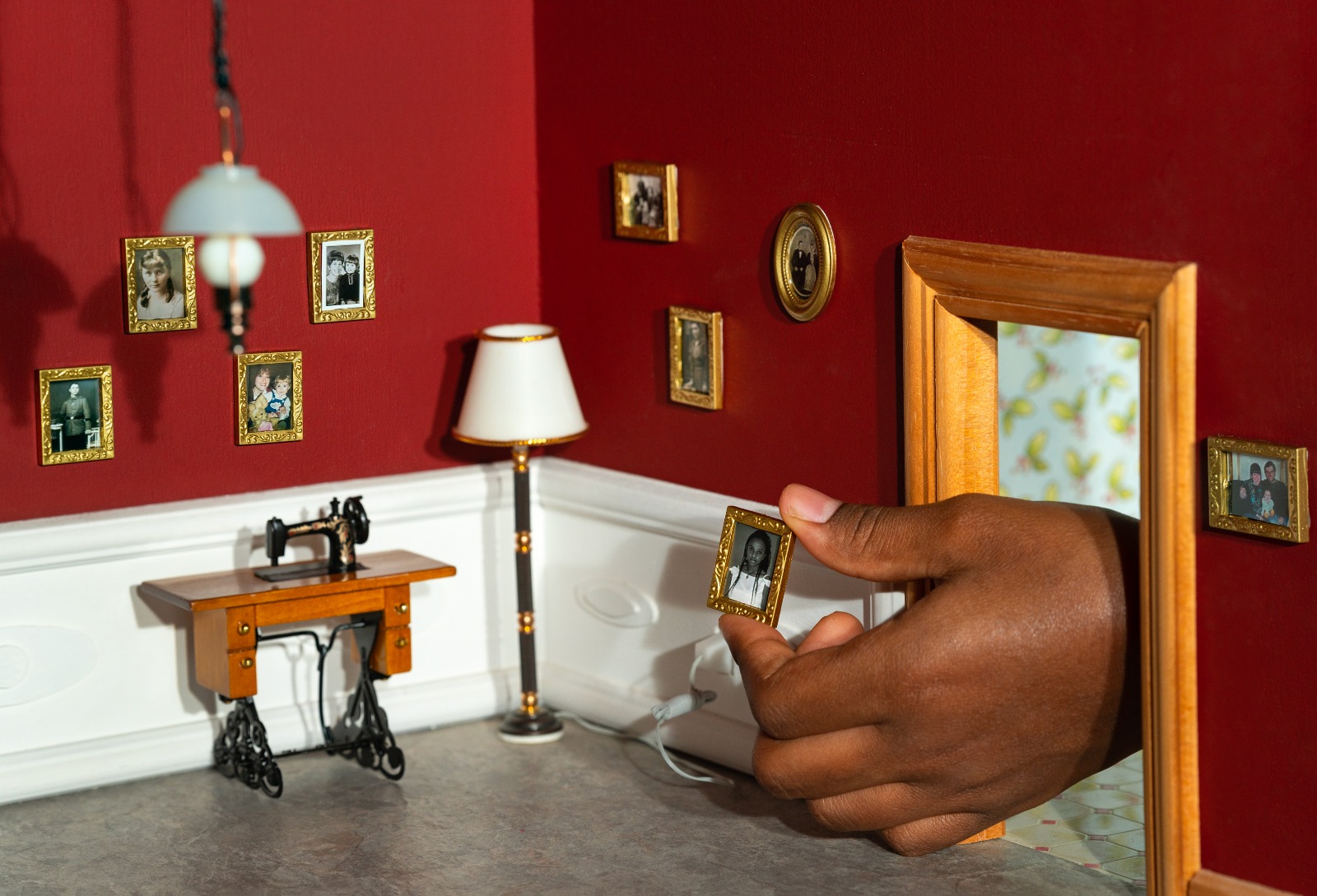
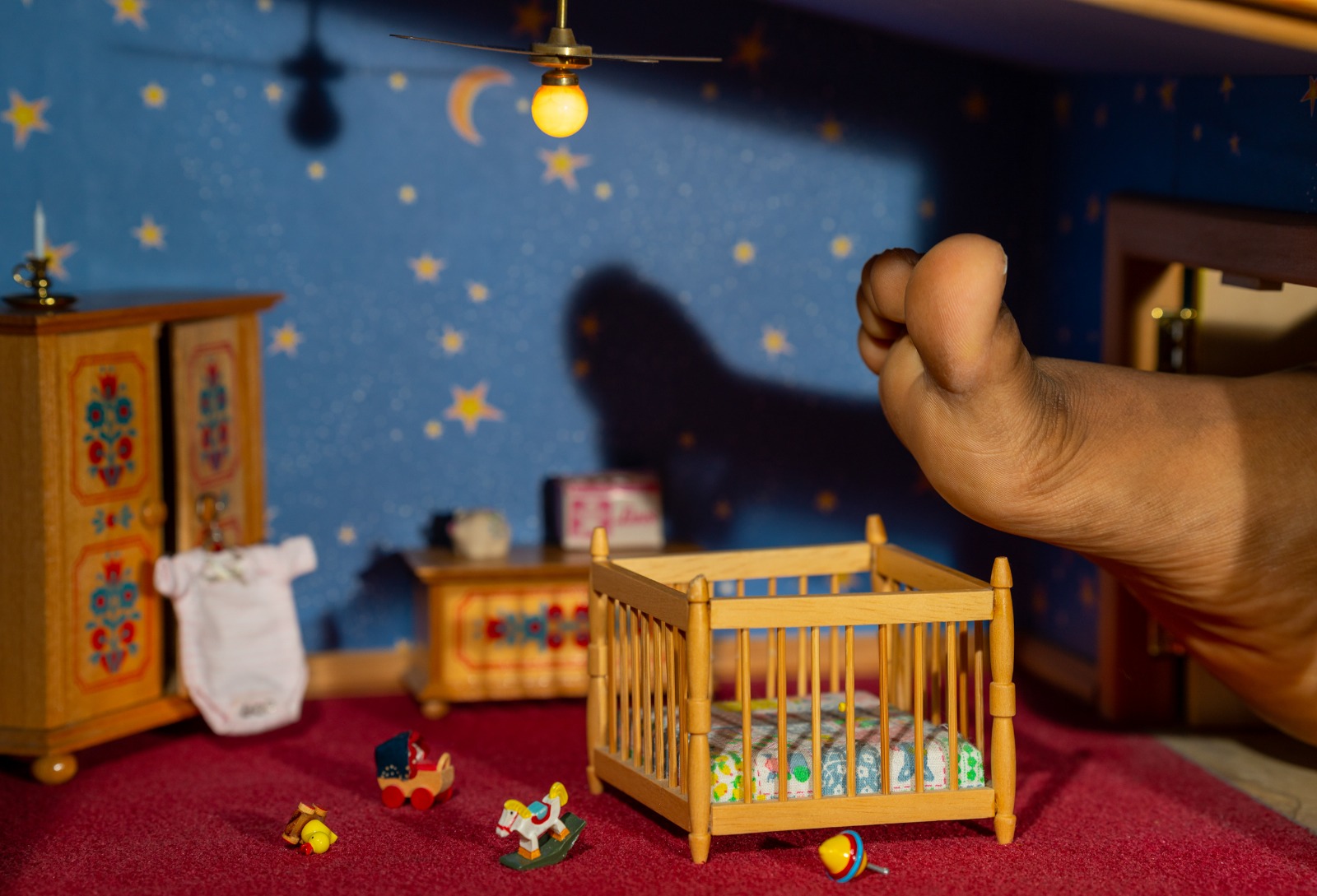
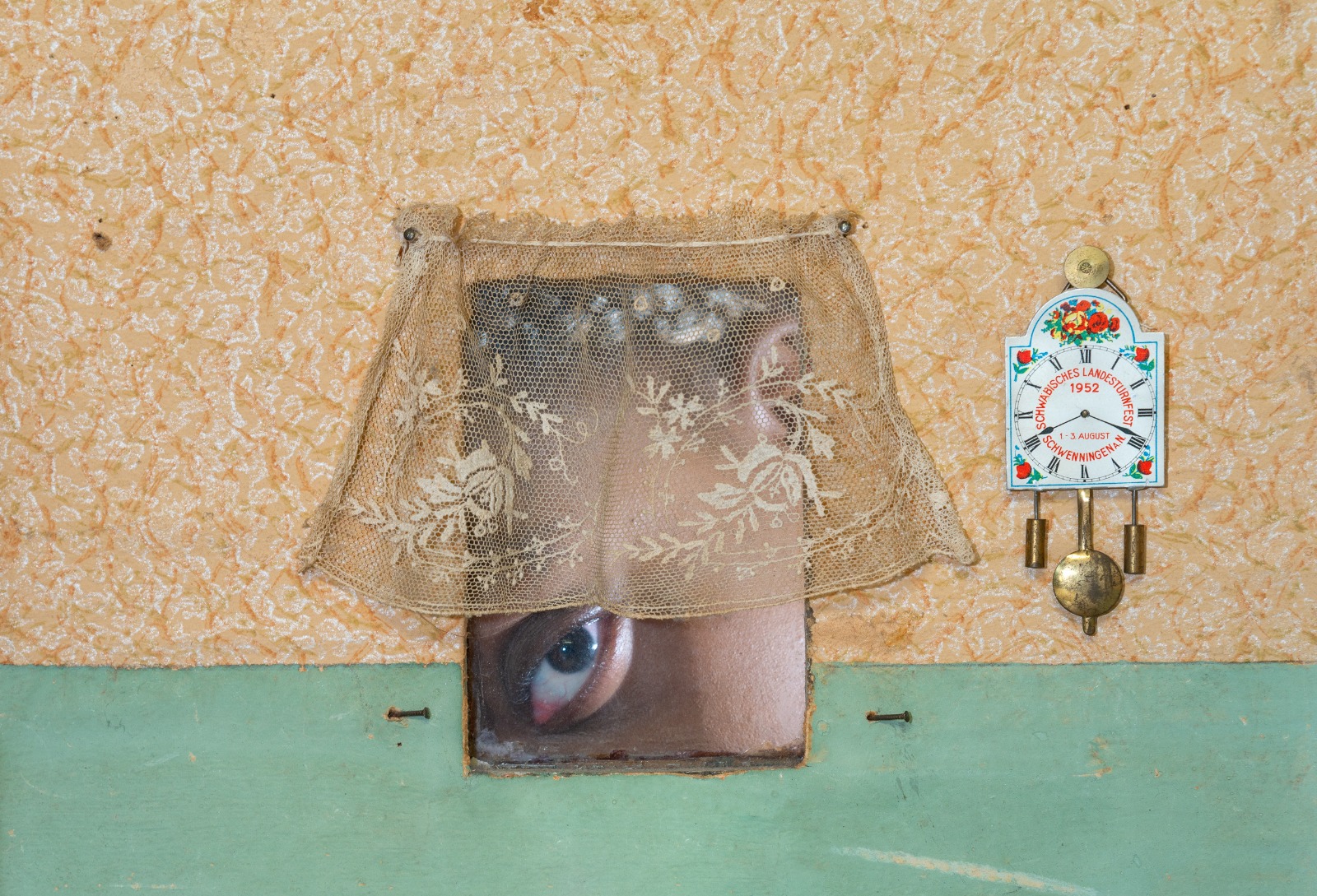
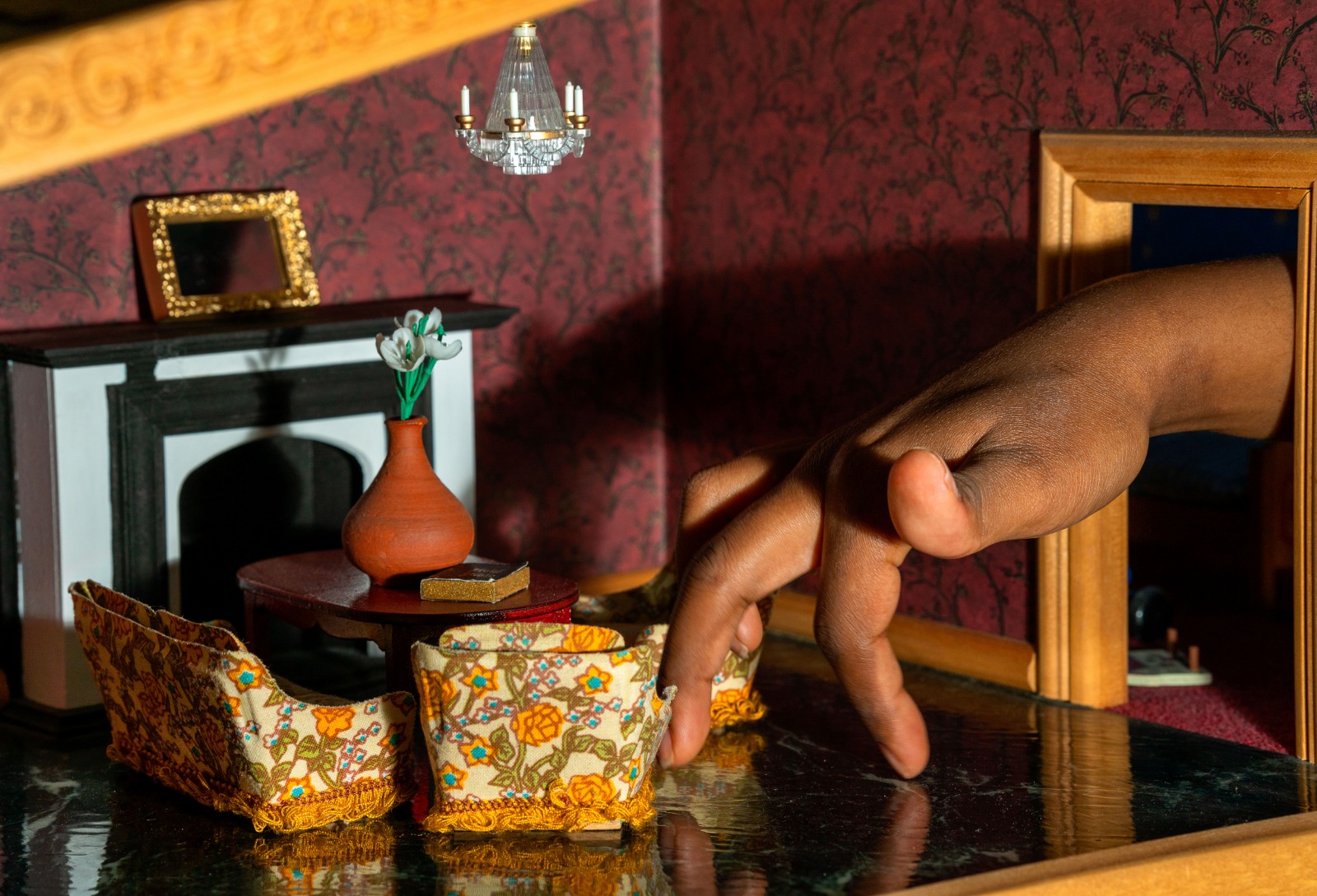
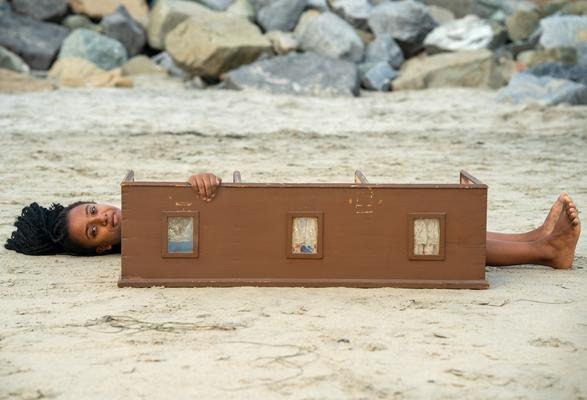
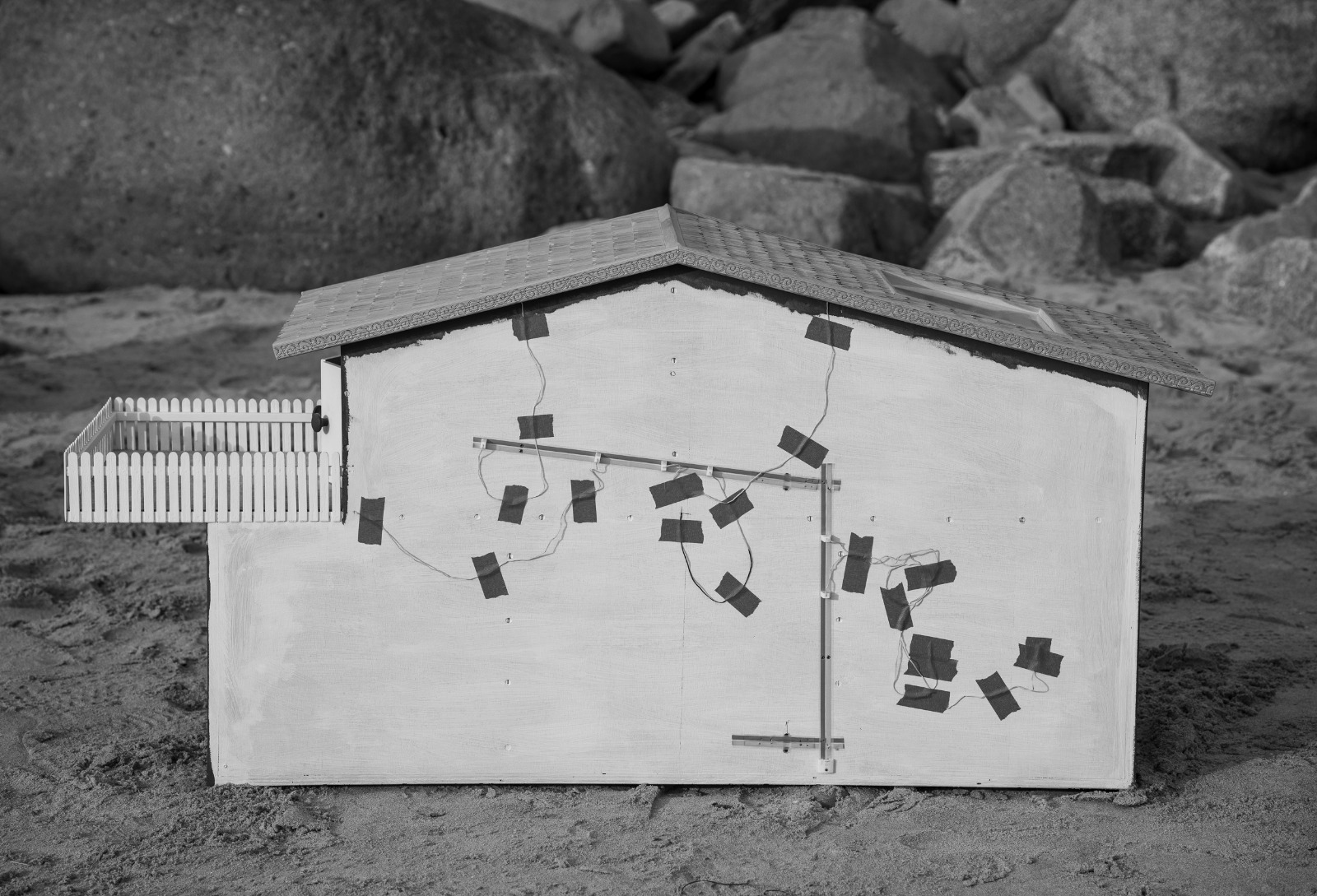
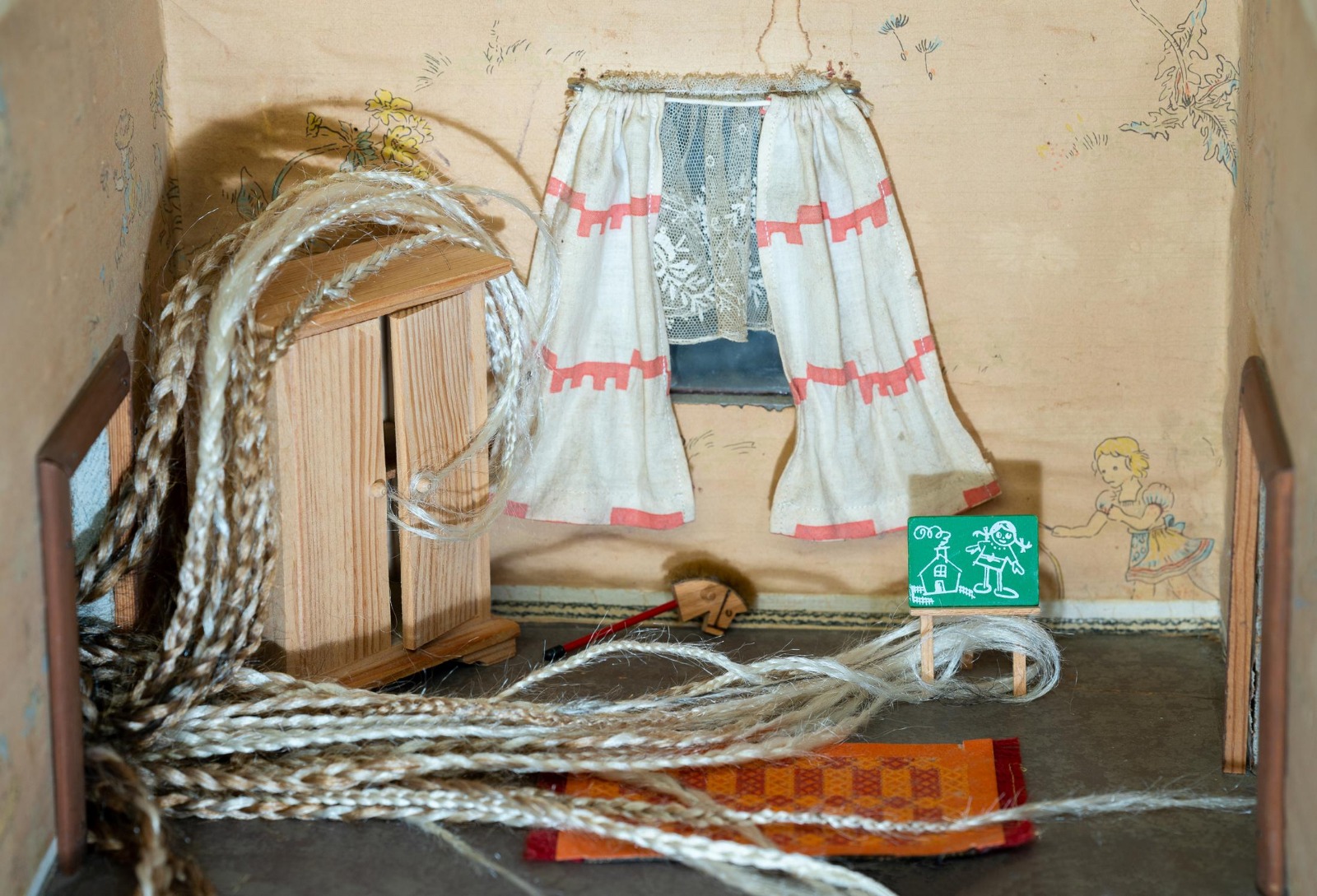
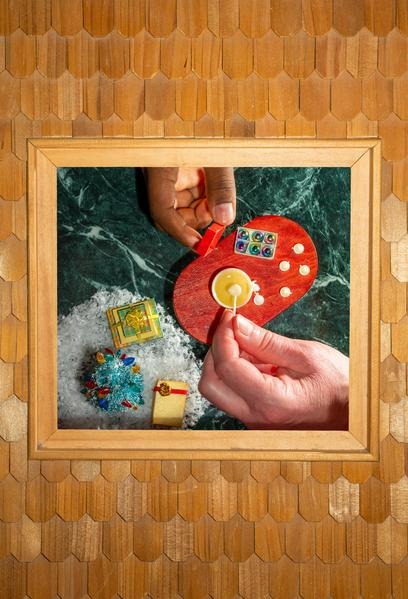
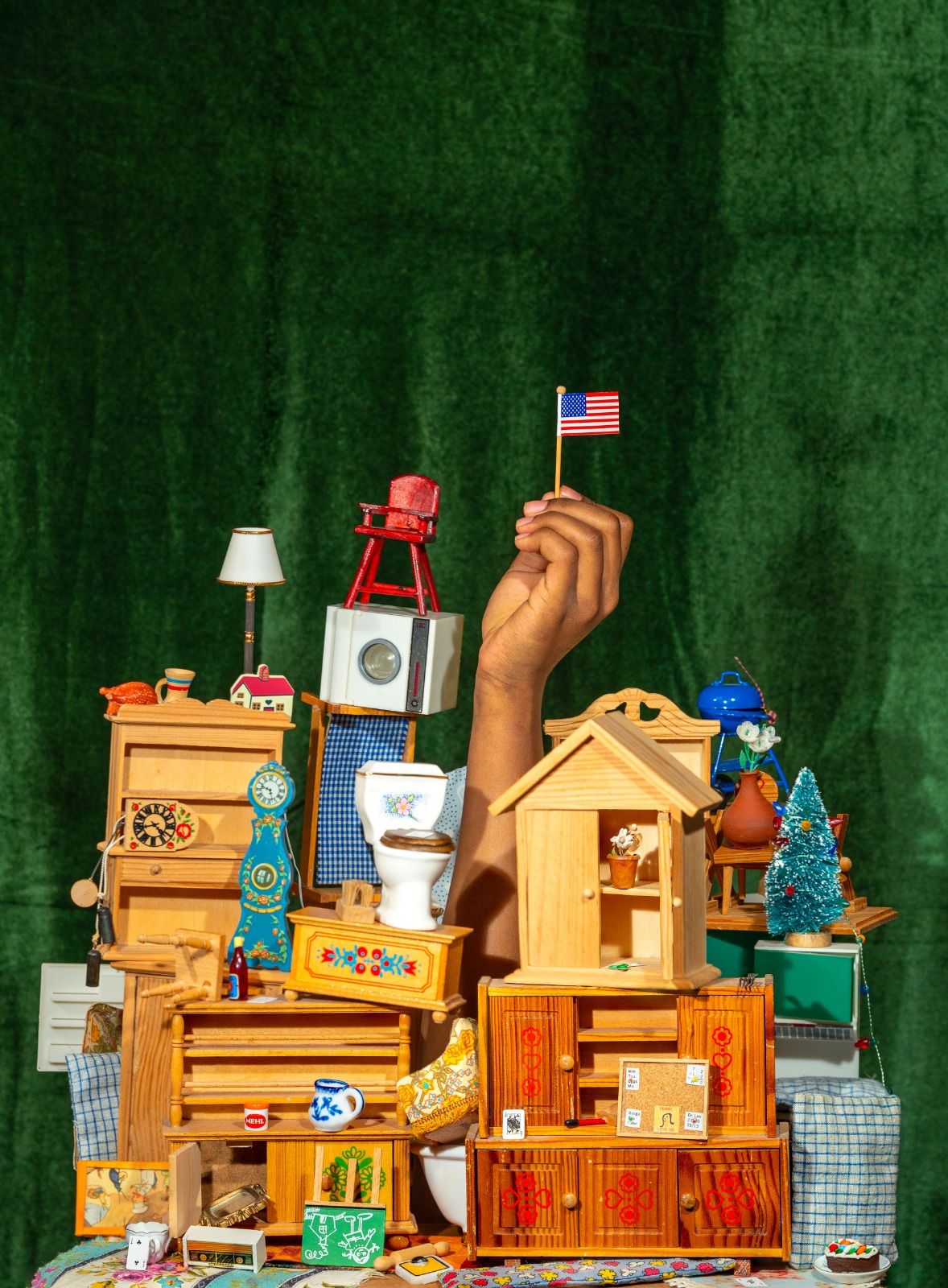
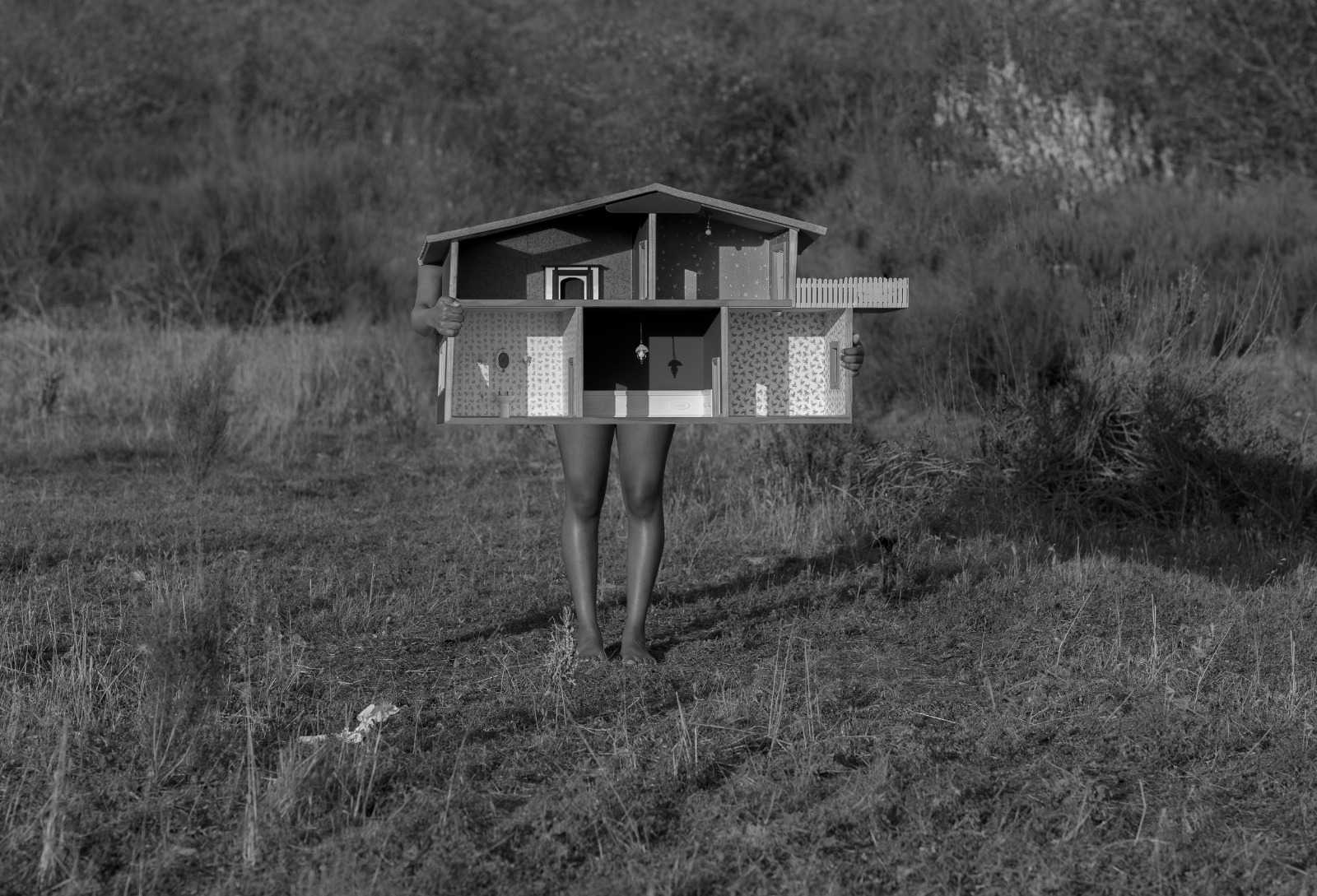
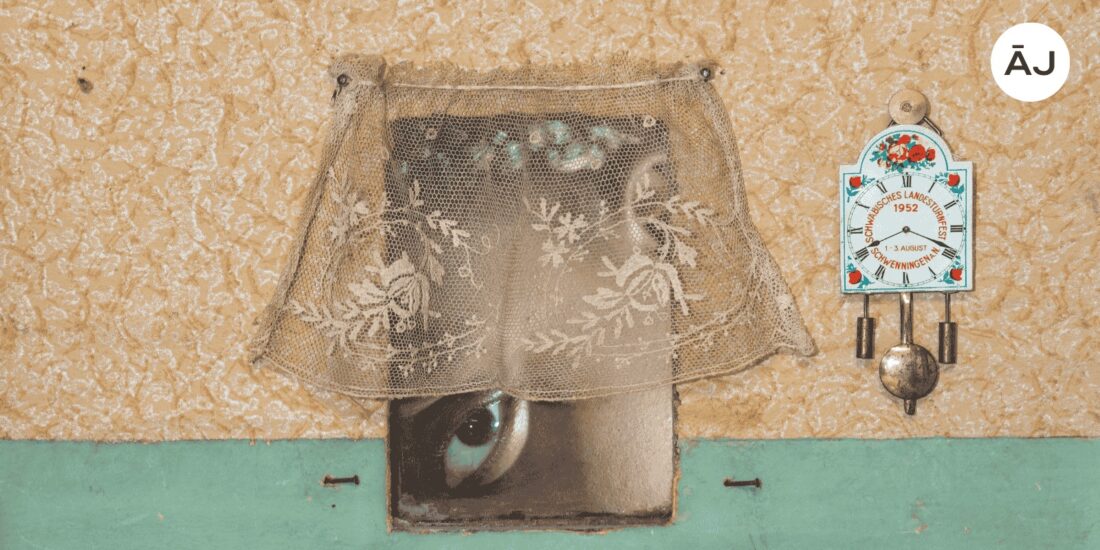
I have been photographing my younger sister for over thirteen years. I started taking it more seriously when she expressed to me her disappointment at not having any photographs of herself as a baby, from the time before our family adopted her. Our photography projects can be seen as a form of photo-therapy, as the act of being photographed helps build her self-confidence, untangle her identity as a young black girl in our German-American family, and battle the insecurities she, like many adolescents, may have about her appearance. With a ten-year age gap between us and parents who are not American, I became a kind of cultural ambassador to my sister, almost like a third parent. Like many older sisters, I often found myself responsible for addressing topics too sensitive for her to bring to our parents. This series, in particular, addresses the adverse and borderline racist reactions my parents received from our extended family in Germany when she was first adopted, and her need to remember what little knowledge she has of her biological family. In this project, she peers into a dollhouse that was first constructed by our great-grandparents, continued by our grandparents, and completed by our father. My sister and I furnished the dollhouse together with objects passed down through our family’s generations, including a clock handmade by my great-grandmother.
This act symbolizes the legitimacy of her claim to my family’s generational memory, despite possible objections from ignorant relatives. Notably, my great-grandmother, who never had the chance to meet my sister, also adopted a child who was orphaned during World War II. The way my sister interacts with the dollhouse mirrors situational feelings of outsideness. For example, when my mother and I speak in Schwäbisch, the dialect of German that we speak, around her. This work felt important to create because my relationship with my sister is often questioned, especially by strangers in public who try to decode how we belong together. Photography allows me to express the responsibility I feel to emotionally support my sister through any challenges she may face as a result of growing up in a white family, especially as the United States continues to be divided along racial lines. The audience for this work is anyone who has ever felt out of place while still belonging. I expect that, over time, racial relations will come to be less foregrounded than it is now, as the love I have for my sister becomes more common.
Utilizziamo i cookie per essere sicuri che tu possa avere la migliore esperienza sul nostro sito. Se continui ad utilizzare questo sito noi assumiamo che tu ne sia felice.